
Learning trails
Thirty-two detailed field notes arranged across six routes. Every note includes an editorial image, a fictional practice, a caution, and a modest next question.
Offline Android learning edition
Relief Route Fieldbook is a private, offline learning journal for examining humanitarian principles, context, protection, responsible handoffs, evidence, and reflective decision habits.

A field journal, not a field directive
The app turns broad humanitarian ideas into bounded learning prompts. It does not establish current needs, authorize response, collect donations, coordinate routes, or replace current local, technical, legal, medical, safeguarding, security, or logistics review.
Thirty-two detailed field notes arranged across six routes. Every note includes an editorial image, a fictional practice, a caution, and a modest next question.
Eighteen fictional dilemmas invite readers to pause, choose a response, and compare their reasoning with a bounded explanation.
Twelve conversation checklists and an 84-term glossary help readers name assumptions, handoffs, evidence limits, protection concerns, and closeout questions.

Visual prompts encourage review of place, season, markets, storage, compatibility, timing, accessibility, and changing information. No real route or location is represented.
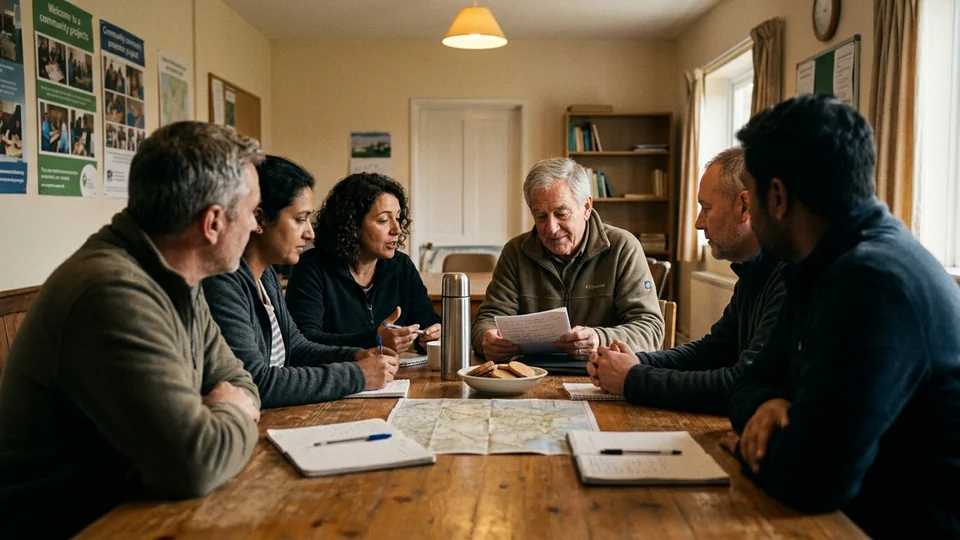
Facilitation cards help distinguish observation, interpretation, values, proposals, missing voices, stop conditions, and responsible next checks.

Field pins, review marks, and one bounded notebook entry stay in Android app-private storage. There is no account, cloud sync, ad SDK, analytics, or internet permission.
The offline edition
The app is deliberately small in behavioral scope. Its learning library is embedded in the installation and remains available without network access.
Use boundaries
Clear limits protect readers from interpreting an educational experience as a current service, official needs list, secure records system, or operational tool.
The app does not accept money, goods, applications, case details, service requests, or beneficiary information.
Abstract maps and handoff scenes are editorial prompts. They do not identify safe corridors, facilities, distribution sites, or current conditions.
The notebook is a simple local reflection space. Do not enter names, medical information, complaints, exact locations, child data, routes, credentials, or security details.